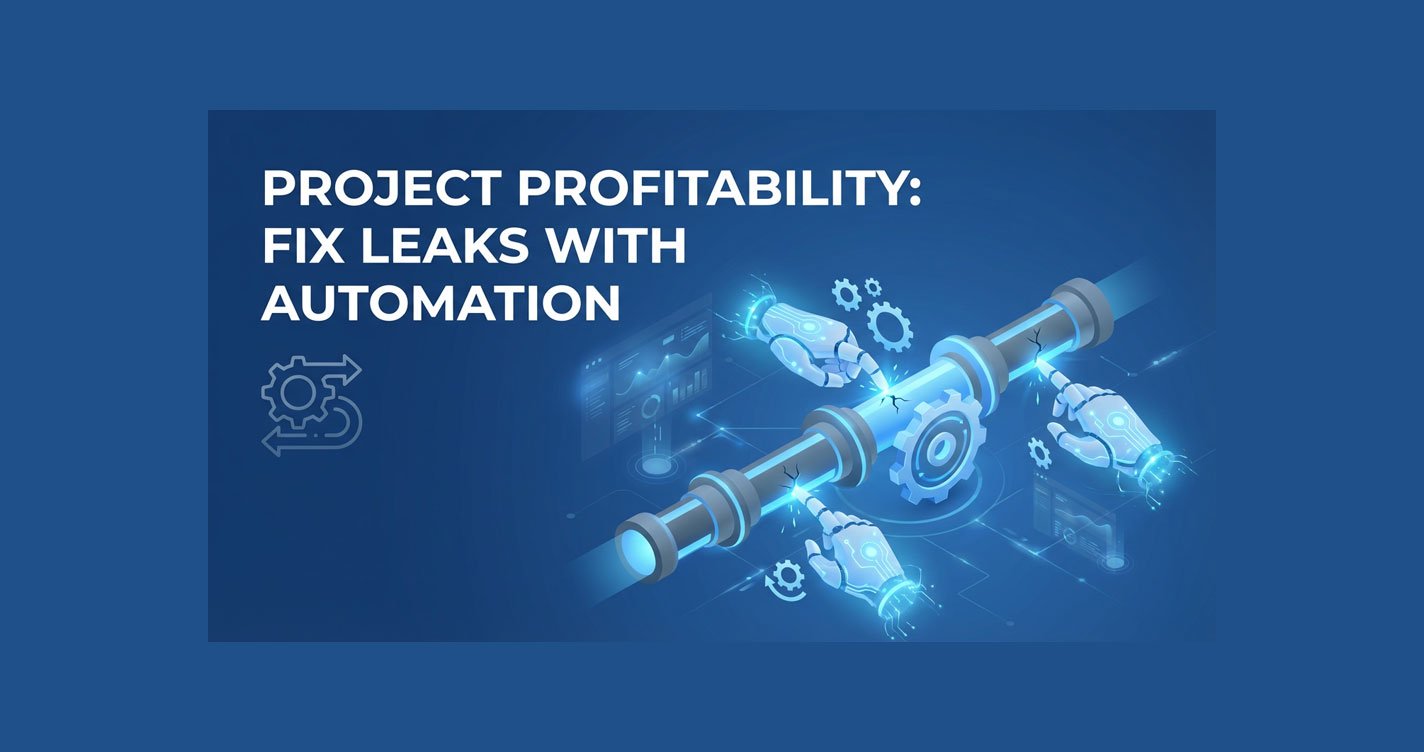
Project Profitability: Fix Leaks with Automation
Imagine your agency as a high-performance engine. You invest in the best tools, hire talented people, and fuel it with your vision. But even the most powerful engine can lose efficiency if there are tiny, undetected leaks in the system. Over time, these leaks—barely noticeable day to day—can drain your resources, slow your growth, and quietly erode your profits.
Most agency owners are so focused on the next project, the next client, or the next fire to put out, that they never stop to check for these hidden drains. The result? A business that works harder and harder, but never seems to move faster or farther.
This article is your blueprint for finding and fixing those leaks. We’ll show you how to spot the subtle gaps in your operations, plug them with smart automation, and transform your agency into a profit-generating powerhouse—one that runs smoothly, scales easily, and gives you back the freedom you set out to achieve.
Table of Contents
- The Unseen Cost of Operational Leaks
- Where Profits Slip Away: The Five Agency Gaps
- The Domino Effect: How Small Leaks Multiply Losses
- From Patchwork to Pipeline: Building Seamless, Automated Flows
- Seeing the Whole Picture: Dashboards That Reveal the Truth
- Real-World Turnarounds: Agencies That Sealed Their Leaks
- Step-by-Step: Your Profit Leak Audit & Automation Roadmap
- Tools That Make the Difference
- Frequently Asked Questions
- Conclusion: Turning Drips into Dividends
1. The Unseen Cost of Operational Leaks
Every agency has a budget for salaries, software, and marketing. But few account for the “leakage” that happens when processes are manual, information is siloed, or approvals get stuck in limbo. These aren’t line items on your P&L, but they’re just as real—and often far more expensive.
What do these leaks look like?
- A project manager spends 30 minutes every morning updating three different tools with the same information.
- A client onboarding process requires five emails and two phone calls before work can even begin.
- Status updates are missed because they’re buried in Slack threads or lost in email chains.
- Reports are built by hand, pulling data from multiple sources, and take hours each week.
Individually, these seem like minor annoyances. Collectively, they add up to hundreds of hours and tens of thousands of dollars lost every year. Worse, they sap your team’s energy, frustrate your clients, and keep you stuck in reactive mode.
The bottom line: If you’re not actively searching for and fixing these leaks, you’re leaving money—and momentum—on the table.
2. Where Profits Slip Away: The Five Agency Gaps
Let’s break down the most common places agencies lose profit, often without realizing it.

A. The Relay Race Fumble
Every project is a relay race, with tasks handed off from one person to the next. But if the baton is dropped—because of unclear ownership, missing information, or manual steps—progress stalls.
Symptoms:
- Tasks sit in “waiting for review” for days.
- Team members duplicate work because they don’t know what’s been done.
- Clients get frustrated by delays or repeated questions.
B. The Patchwork Quilt of Tools
Agencies love tools. But when each department uses its own platform, information gets scattered. Instead of a seamless workflow, you have a patchwork quilt—colorful, but full of gaps.
Symptoms:
- No single source of truth for project status.
- Data must be copied and pasted between systems.
- Reporting requires manual reconciliation.


C. The Manual Maze
Some processes are so convoluted, even the people who created them can’t explain every step. Manual busywork—like updating spreadsheets, sending reminders, or tracking approvals—eats up valuable time.
Symptoms:
- Team members spend more time on admin than on creative work.
- Errors creep in due to manual data entry.
- No one knows where to find the latest version of a document.
D. The Invisible Bottleneck
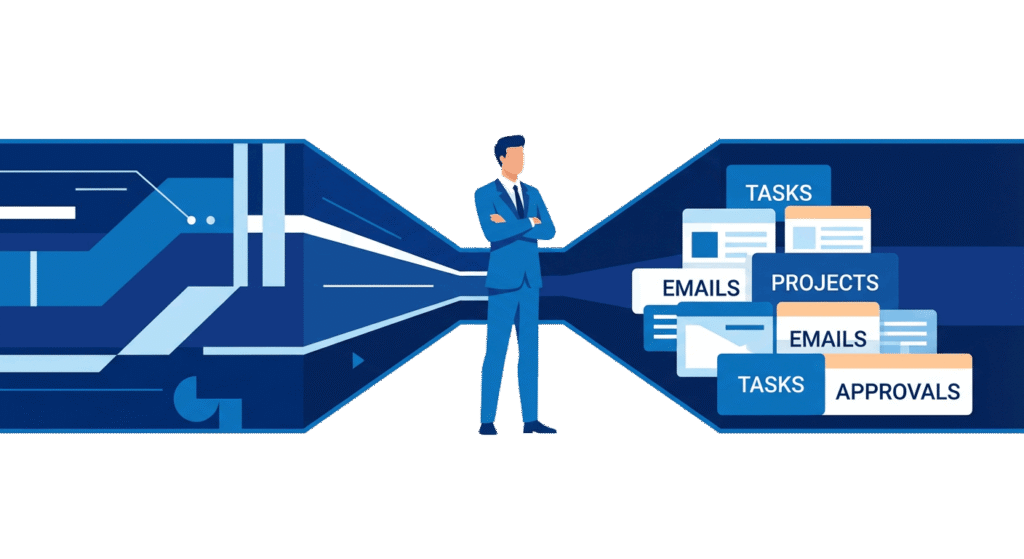
Sometimes, the biggest leak is a person—often the owner or a senior manager. If every decision, approval, or client question must go through one person, the whole agency slows to their pace.
Symptoms:
- Projects pile up waiting for sign-off.
- The owner is always “in meetings” or “catching up.”
- Team members are afraid to act without explicit approval.

E. The Blind Spot
Without real-time visibility, you’re flying blind. You don’t know which projects are profitable, which clients are at risk, or where your team is overloaded—until it’s too late.
Symptoms:
- Surprises at the end of the month (over-budget, missed deadlines).
- No clear metrics for success.
- Gut-feel decisions instead of data-driven ones.
3. The Domino Effect: How Small Leaks Multiply Losses
It’s tempting to ignore small inefficiencies. But in an agency, every leak is a domino. One missed handoff leads to a delayed project, which leads to a frustrated client, which leads to a lost referral or renewal.
Example:
A creative agency had a manual process for client feedback. Designers would email proofs, wait for replies, and then manually update project boards. A single missed email led to a week-long delay, which caused the client to question the agency’s reliability. The project finished late, the client left a lukewarm review, and the agency lost out on a lucrative follow-up project.
Lesson:
Small leaks rarely stay small. They ripple outward, multiplying their impact on your bottom line.
4. From Patchwork to Pipeline: Building Seamless, Automated Flows
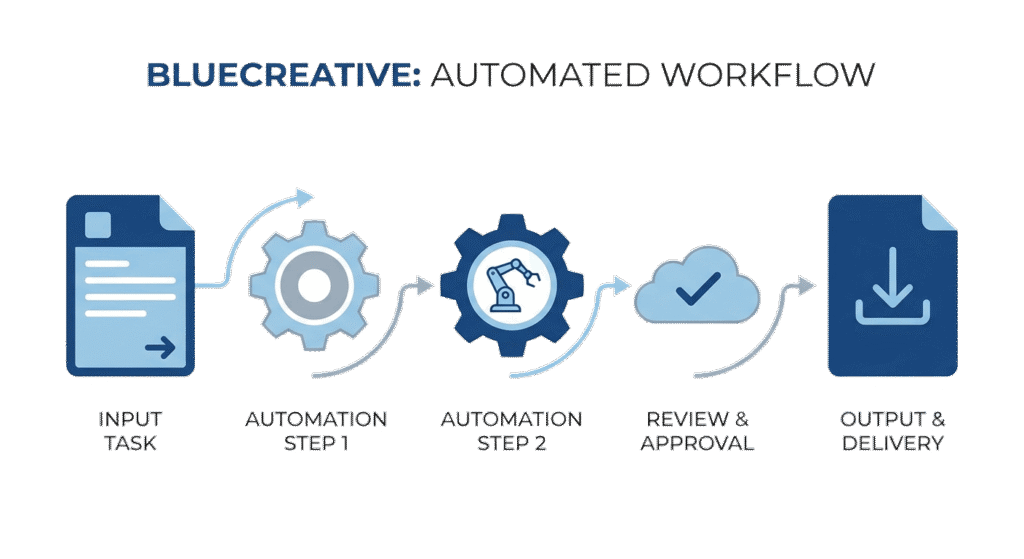
The solution isn’t to work harder—it’s to work smarter. Automation turns your patchwork of tools and manual steps into a seamless pipeline, where information flows effortlessly and tasks move forward without constant intervention.
Step 1: Map Your Current Process
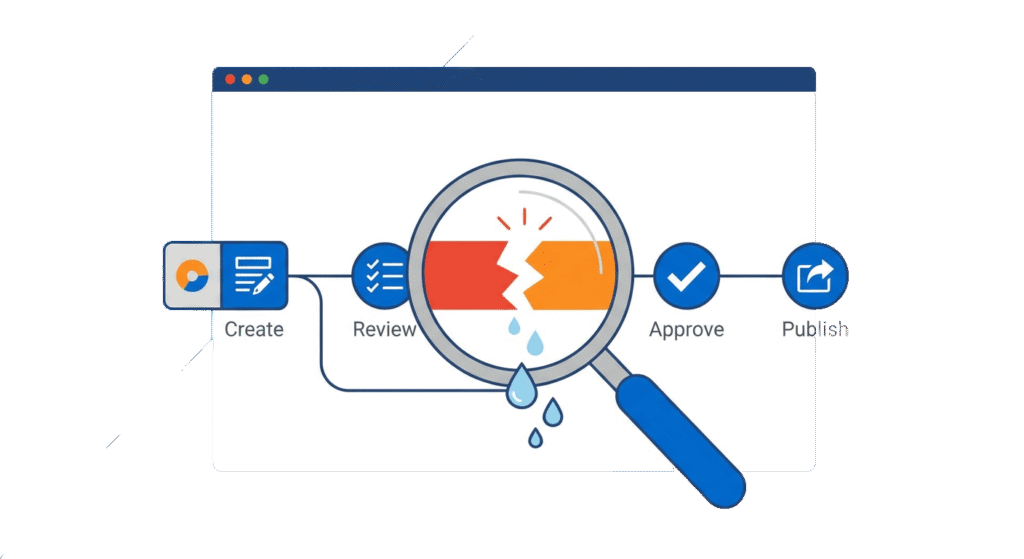
Start by diagramming your workflow for a typical project. Who does what, when, and how? Where are the handoffs? Where do things slow down or get lost?
Tip: Use a whiteboard or a tool like Miro to visualize the process. Involve your team—they know where the pain points are.
Step 2: Identify the Leaks
Look for:
- Steps that require manual data entry or copying between tools.
- Tasks that depend on a single person’s availability.
- Places where information is stored in multiple locations.
- Approvals or reviews that routinely cause delays.
Step 3: Automate the Obvious
Start with the low-hanging fruit:
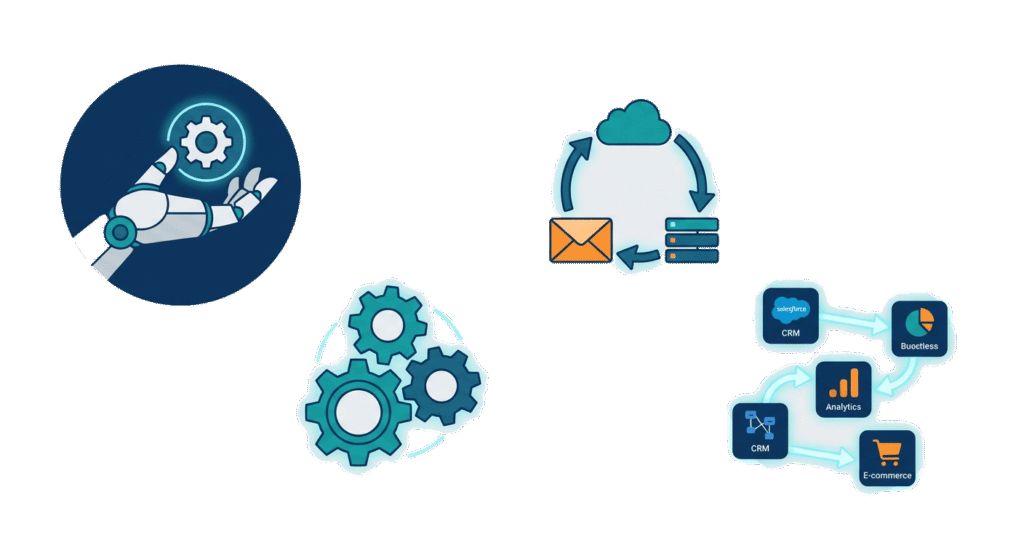
- Use project management tools like ClickUp to centralize tasks, files, and communication.
- Set up automations for recurring tasks (e.g., weekly status updates, client reminders).
- Integrate your CRM, invoicing, and reporting tools to eliminate double entry.
- Use forms for client intake that automatically create projects and assign tasks.

Step 4: Empower Your Team
Build workflows that allow team members to move projects forward without waiting for approvals at every step. Use decision matrices, templates, and clear guidelines to delegate authority.
Step 5: Monitor and Optimize
Set up dashboards to track key metrics: project status, profitability, client satisfaction, and team workload. Review these regularly and adjust your processes as needed.

5. Seeing the Whole Picture: Dashboards That Reveal the Truth
A dashboard is more than a pretty chart—it’s your agency’s control panel. With the right setup, you can see at a glance:
- Which projects are on track, at risk, or overdue
- Which clients are most profitable (and which are draining resources)
- Where your team is overloaded or underutilized
- How much time is spent on billable vs. non-billable work
Best Practices:
- Use real-time data, not static reports.
- Make dashboards accessible to everyone who needs them.
- Set up alerts for key thresholds (e.g., when a project goes over budget or a deadline is missed).
- Review dashboards in weekly team meetings to keep everyone aligned.
Example:
A digital marketing agency used to spend hours each week compiling reports for clients. By automating data pulls from Google Analytics, ClickUp, and their CRM, they cut reporting time by 80% and improved client satisfaction—because clients could see results in real time.
6. Real-World Turnarounds: Agencies That Sealed Their Leaks
Case Study 1: The Creative Studio’s Onboarding Overhaul
A 10-person creative studio realized their client onboarding process involved five separate emails, three tools, and two phone calls. By mapping the journey and automating key steps (using ClickUp forms, Zapier integrations, and automated task assignments), they cut onboarding time by 70% and saw a 15% boost in project margins within two months.
Case Study 2: The Consultancy’s Approval Revolution
A consulting firm found that every proposal required the owner’s sign-off, causing bottlenecks. By implementing a decision matrix and automating approval workflows, they reduced turnaround time from days to hours. The owner was able to step back from daily operations and focus on growth.
Case Study 3: The Marketing Agency’s Reporting Renaissance
A marketing agency was losing hours each week to manual reporting. By integrating their project management, analytics, and invoicing tools, they created a single dashboard that updated in real time. The result? Faster billing, happier clients, and a 10% increase in cash flow.
7. Step-by-Step: Your Profit Leak Audit & Automation Roadmap
Ready to plug your agency’s leaks? Here’s a practical roadmap:
- List Every Recurring Task: For one week, have your team write down every recurring task they do—no matter how small.
- Estimate Time and Frequency: For each task, estimate how long it takes and how often it’s done. Multiply to get a monthly or annual total.
- Identify Manual Steps: Highlight any task that involves manual data entry, copying information, or waiting for someone’s approval.
- Prioritize by Impact: Which tasks take the most time? Which cause the most frustration? Which, if automated, would free up the most resources?
- Choose Your Tools: Select automation tools that integrate with your current stack. For most agencies, this means ClickUp, Zapier or Make, GHL or HubSpot, and Google Data Studio or Power BI.
- Automate One Process at a Time: Don’t try to automate everything at once. Start with the highest-impact process, build and test the automation, then move to the next.
- Train and Document: Create clear SOPs and short training videos for each new workflow. Store them in a central location.
- Review and Refine: Set a monthly review to check what’s working, what’s not, and where new leaks may have sprung up.
8. Tools That Make the Difference
Here’s a quick guide to the tools that can help you seal your agency’s profit leaks:
- ClickUp: Centralizes tasks, files, and communication. Automates recurring work and integrates with dozens of other tools.
- GoHighLevel (GHL): All-in-one CRM and marketing automation platform.
- Zapier/Make/n8n: Connects your apps and automates workflows.
- Jotform, Typeform, GHL Forms: Automate client intake and feedback.
- Google Data Studio, Power BI: Build real-time dashboards for profitability, capacity, and project health.
- Slack, Teams, Zoom, Google Workspace: Integrate with project management and CRM for seamless communication.
- ChatGPT, Notion AI, Gemini: Use AI for content creation, process documentation, and client communications.
9. Frequently Asked Questions
Is automation expensive to implement?
Most agencies see ROI within 6–8 weeks. Start with a free audit or a focused sprint to prove value before scaling up.
Will my team resist new systems?
Involve your team from the start. Automations that remove busywork and clarify processes are quickly adopted—especially when paired with clear training.
What if my agency is “different” or “unique”?
Custom workflows are the norm, not the exception. Modern automation tools are flexible and can be tailored to your exact needs.
Do I need to switch all my tools?
No. Start by integrating what you already use. The goal is to unify, not replace.
Do I need to switch all my tools?
No. Start by integrating what you already use. The goal is to unify, not replace.
10. Conclusion: Turning Drips into Dividends
Every agency has leaks. The difference between those that thrive and those that struggle is the willingness to investigate, adapt, and automate. By taking a systematic approach—auditing your processes, prioritizing high-impact fixes, and leveraging the right tools—you can transform hidden drips into measurable dividends.
Don’t let invisible inefficiencies dictate your growth. Take action, embrace change, and watch your agency’s profitability rise—one sealed leak at a time.
Curious how much you could save by plugging your agency’s hidden leaks? Start with a complimentary assessment—no strings attached. Discover your biggest opportunities and take the first step toward a more profitable, self-sustaining agency.